

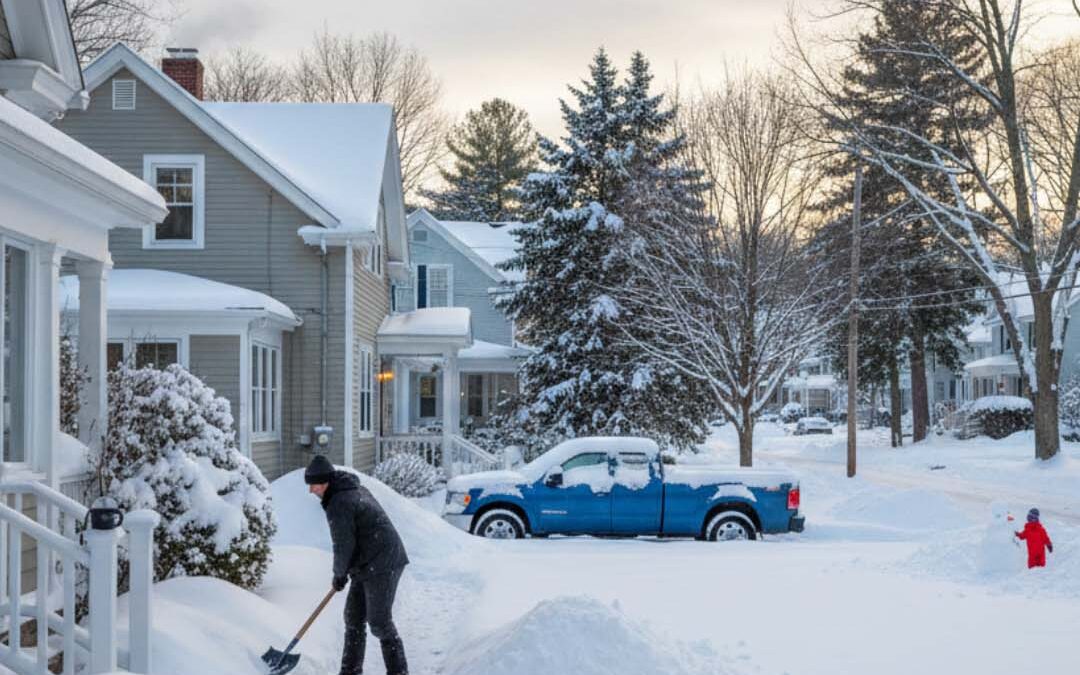
Living on the North Shore, we’re no strangers to the beauty—and the bite—of a Massachusetts winter. From Nor’easters that rattle the windows in Danvers to the freezing salt spray in Salem, winter storms are a way of life here.
At Townsend Insurance Group, we’ve spent years helping our neighbors protect their biggest investments: their homes and vehicles. We know that the best way to handle a blizzard isn’t just a good insurance policy—it’s a good plan.
Here is your comprehensive guide on what to do before, during, and after a winter storm to keep your family safe and your property protected.
Before the Storm: Preparation is Protection
The window of time before the first snowflake falls is your most valuable asset.
- Winterize Your Home: Check your heating system and clean your vents. Ensure your thermostat is set to at least 55°F, even if you aren’t home, to prevent pipes from freezing.
- Clear the Exterior: Clean your gutters so melting snow has a place to go. Trim back dead branches that could snap under the weight of heavy ice and fall on your roof or car.
- The “Stay-at-Home” Kit: Gather at least three days of supplies, including bottled water, non-perishable food, flashlights, and extra batteries. Don’t forget a first-aid kit and a one-month supply of any necessary medications.
- Vehicle Readiness: Fill your gas tank. Keep a winter emergency kit in your trunk with a blanket, ice scraper, jumper cables, and a bag of sand or salt for traction.
- Review Your Coverage: Now is the time to ensure your homeowner’s and auto policies are up to date. Give us a call at 978-774-3313 if you’re unsure about your limits!
During the Storm: Stay In and Stay Safe
Once the storm hits, the goal is to minimize risk.
- Stay Off the Roads: Let the Danvers DPW and local plows do their jobs. If you must go out, dress in layers, wear bright colors to be visible to plow drivers, and never crowd a plow.
- Prevent Frozen Pipes: If the temperature plummets, let a tiny trickle of water run from your faucets. Open cabinet doors under sinks to allow warmer air to circulate around the plumbing.
- Heat Safely: Never use a gas stove or oven to heat your home. If you use a generator, keep it outside and at least 20 feet away from windows to prevent carbon monoxide poisoning.
- Check on Neighbors: A quick call or text to an elderly neighbor or a friend living alone can make a world of difference.
After the Storm: The Big Dig-Out
Recovery begins once the wind dies down, but the hazards aren’t over yet.
- Shovel Smart: Avoid overexertion, which is a leading cause of heart attacks in winter. Take frequent breaks and lift smaller loads of snow.
- Clear the Vents: Ensure your dryer, furnace, and water heater vents are clear of snow drifts to prevent carbon monoxide buildup inside the house.
- Check for Damage: Look for signs of ice dams on your roof or water stains on your ceiling. If you spot a downed power line, stay far away and report it to National Grid or Danvers Electric immediately.
- Document Everything: If you do find damage to your home or car, take photos before you start any temporary repairs. This will be vital if you need to file an insurance claim.
We’re Here for You
At Townsend Insurance Group, we don’t just sell policies; we sell a sense of security. Whether you have questions about your “Replacement Cost” coverage before a storm or need help navigating a claim after one, our team at 27 Cherry Street is ready to help.
Stay safe, Danvers!